Fallowfield Brow and Oak Drive
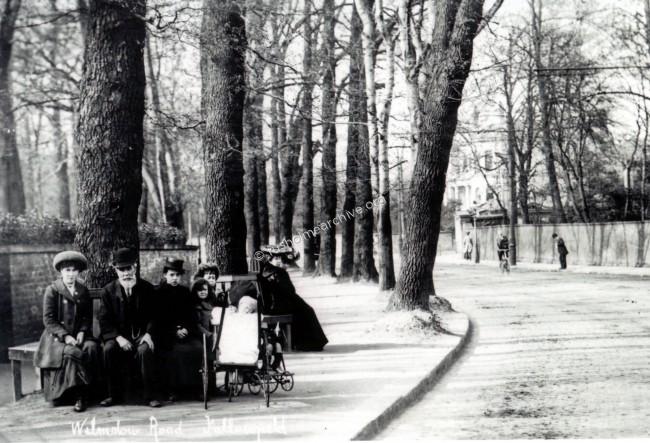
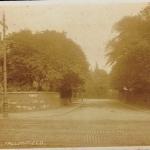
 Fallowfield Brow refers to that gentle rise in Wilmslow Road between Brighton Grove and the entrance to Owens Park, the University Fallowfield Campus.
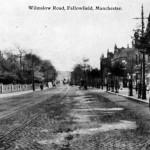
In the photograph above, looking north towards Rusholme, just beyond the cyclist on the far right is the entrance to Old Hall Lane, and looming through the trees in the background right is the mansion called Birchfield. This was demolished to make way for the new buildings of the Hollings Campus, (including the 'toastrack'). I have added a close-up of the sitters, the collective expressions as they watch the photographer are timeless. Just click on the image right for the close-up.
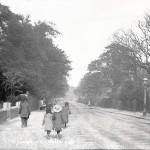
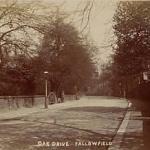
In this photograph below, appears to be taken from a similar position as the above, but looking in a south-easterly direction. Again there seems to be a very quiet and domestic calm to the Fallowfield Boulevard, it must have been a popular venue for mothers, (& nurses) as I think I can see 5 prams in this postcard.
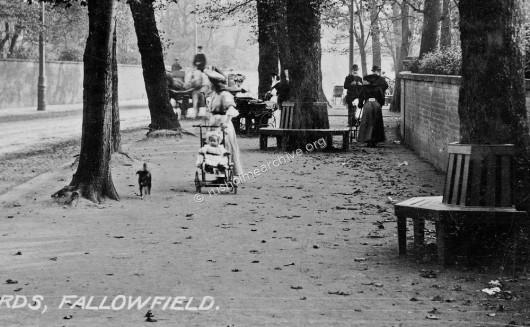
The view below was taken in January 1914, such a calm atmosphere but the outbreak of WW1 was not so far away.
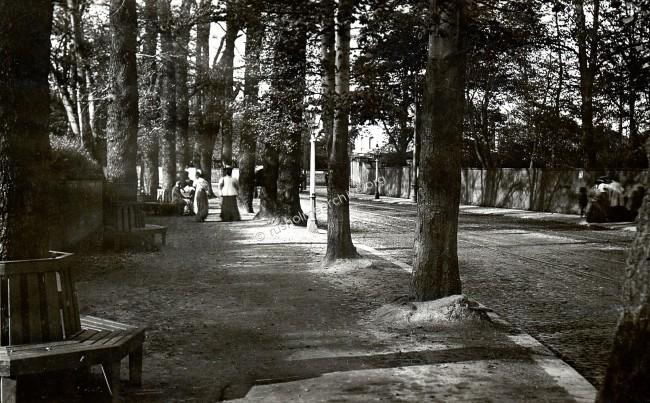
The postcard view below is dated 1913 and looking north, Old Hall Lane is on the right in the distance.
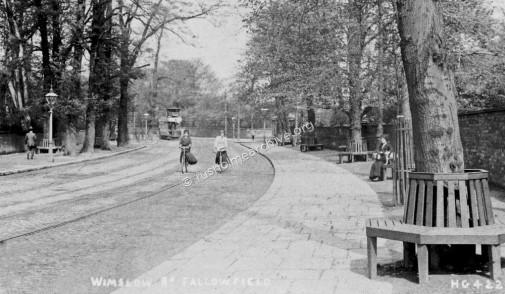
Another view below, looking north towards Rusholme, dated 1905
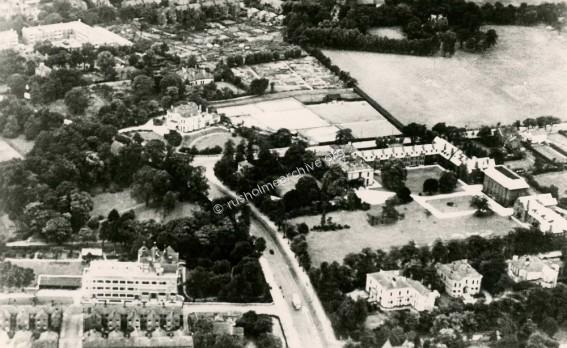
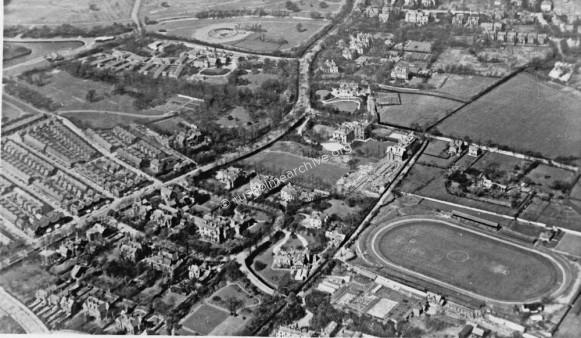
In the aerial view below you can see in the bottom right corner three houses on the northern side of Oak Drive.
Centre & mid-left is the Mansion called Birchfields, this was for a long time used as a social club for the employees of the Co-op. It eventually became the catering college and was finally demolished in1959 when the present iconic 'Toastrack' was built. Just above Birchfields is another mansion, now demolished known as Birch Heys. Away to the top right, on the edge of the Manchester Grammar School playing fields you can see the St James Church Rectory. In the top left you can see Appleby Lodge flats. At the rear you can see the allotments that are still popular!
At the bottom left of the postcard you can see Oakley, the mansion on the easterly side of Fallowfield Brow, it is used as trade union offices by USDAW and the administrative block can be clearly seen alongside the older premises.
In this aerial view below, (taken from a greater height?), you can the University Athletic track, centre right, to the left of the track is the horse-shoe shape of Oak Drive, opposite that lie the terraced houses, and above that adjoining Langly Road is Oakley, (now the USDAW offices). Beyond Oakley and to the left you can see Grangethorpe, (the former Military Hospital) and in the far top left you can see Platt Fields Lake! To the right of the photo Old Hall Lane is still yet to have houses built and opposite towards the top right of the frame, Manchester Grammar School has not been built!
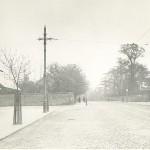
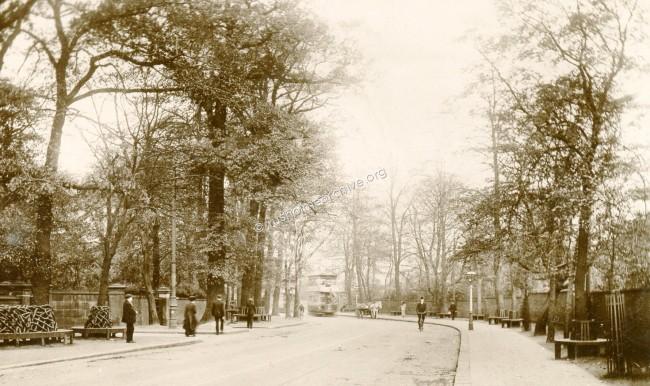
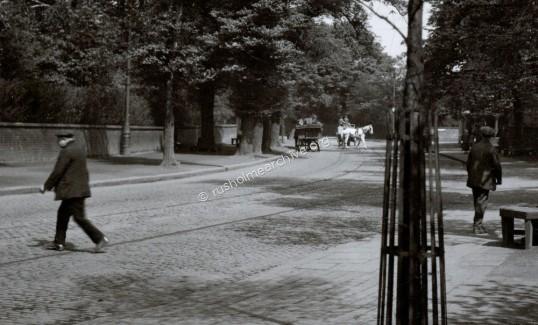
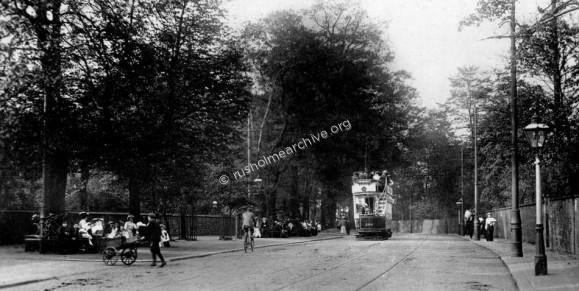
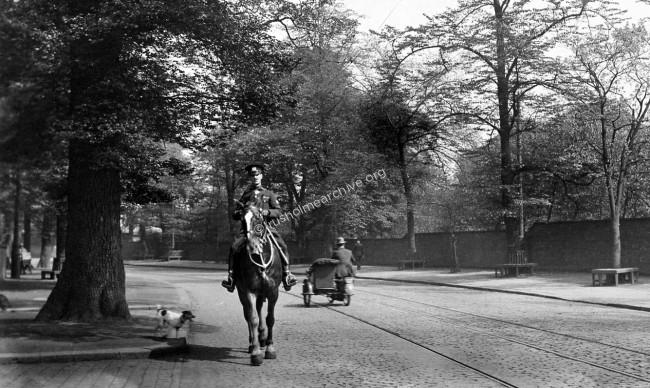
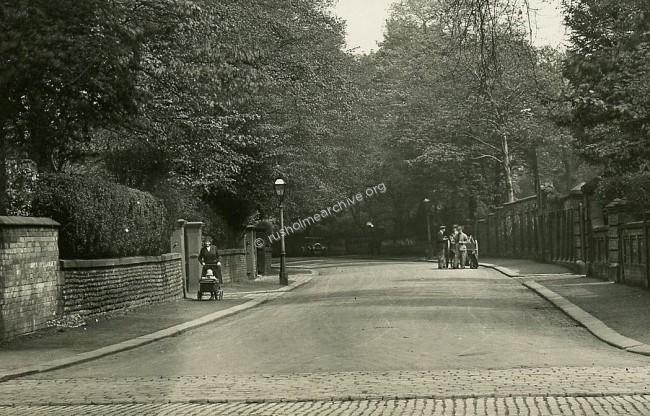
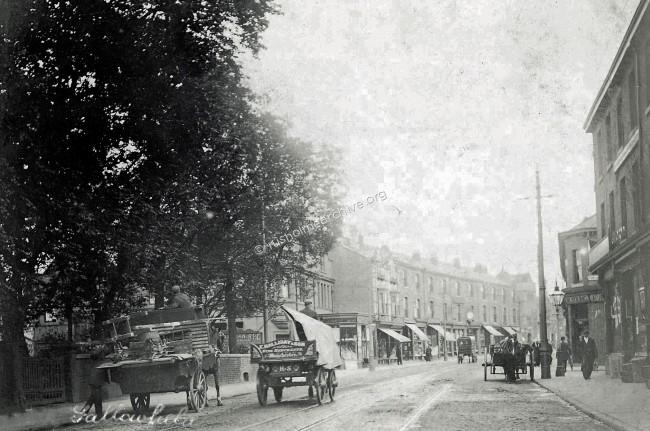
The endless number of different photographs taken in this area must have been for some good reason. It seemed to have been a busy pedestrian route, but clearly the pleasure of sitting here amongst the trees, (look at the seats around each tree trunk!), with only trams & horsedrawn trafficgives a distinct rural air which is obvious in the pictures below.
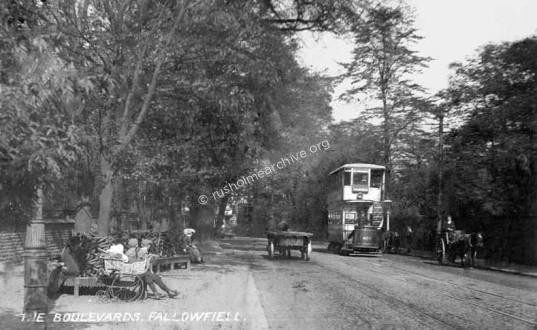
*Postcard below shows a horse-drawn omnibus - pre 1903?'.
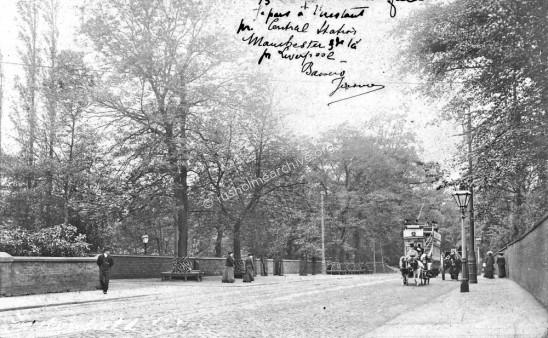
The 'Boulevards'appear to have been created round about the time, (1901-03), that the City Council widened Fallowfield Brow to accommodate two tram lines running north & south.
The souvenir booklet published on the day that Platt Fields Park was opened referred to the, 'Gloomy high brick walls of the eighteenth century have been removed and light iron railings substituted. A wide promenade now adorns the Wilmslow Road frontage, where the fine old trees have been carefully preserved and surrounded with seats. A view of the park is thus opened out to the thousands of citizens who daily pass along the Wilmslow Road'
The photograph above has been considerably restored by fotofurbish.co.uk - if you look at the last picture in the gallery below you will see the postcard before restoration.
'Photograph below, is the top of Fallowfield Brow, Owens Park now on the left'
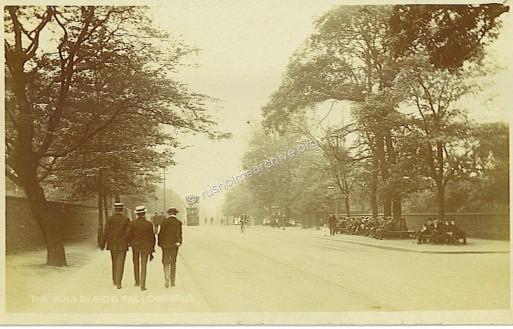
The 'Boulevard' always seems popular!
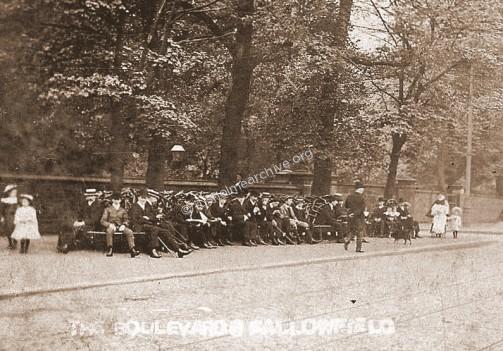
*In the photograph above and to the right hand side the entrance gates to 'Oakley' can be seen.
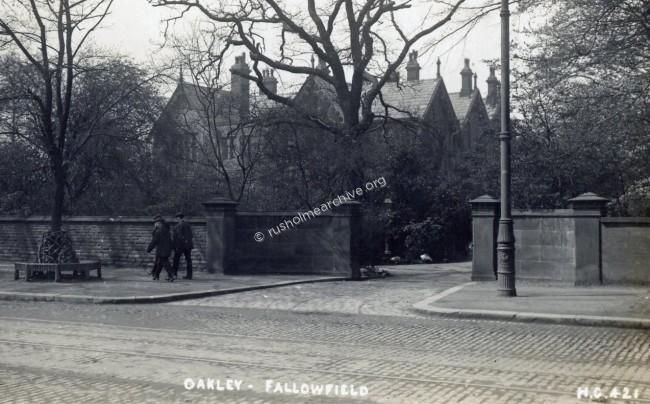
Photograph above is of' 'Oakley', one of three large mansions built on the right hand and western side of Fallowfield Brow in the early 19th century. This building was also briefly a hotel but since 1920 it has been the principal office for USDAW, a trade union.
Ashfield
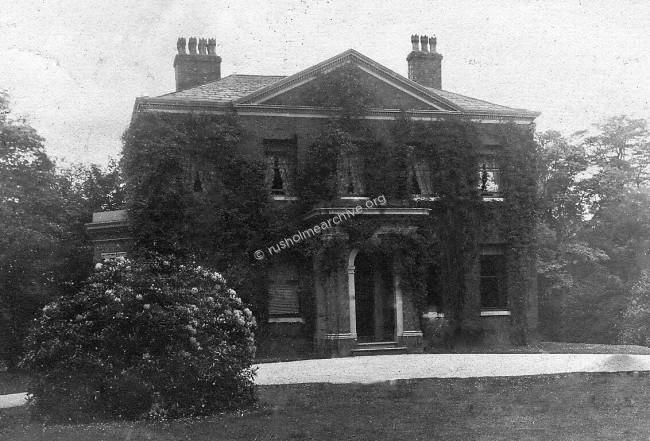
Another of the three large mansions built on this western side of Fallowfield Brow was Ashfield. This is in the photograph below, it was older than Oakley, built in the early part of the 19th century on the north side of Oakley and the home of a Mr Robinson. Mrs Williamson in her little book 'Sketches of Fallowfield' was told by Mr Robinsons' gardener that he well remembered the huntsmen on horseback pursuing a fox with the dogs through the grounds of Ashfield. She also described Ashfield being surrounded by extensive pleasure grounds, containing plantations, fish ponds and every kind of garden.
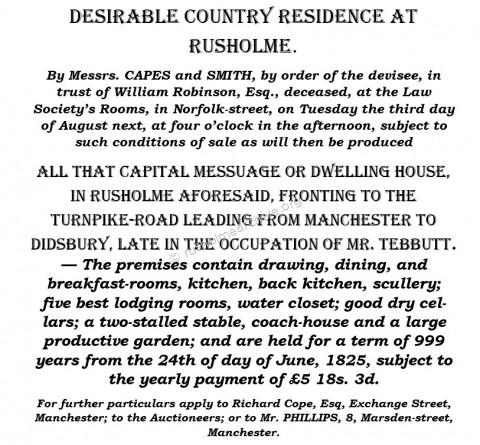
Advertising copy below refers to the auction of Ashfield, from the Manchester Courier, August 1847.
After the sale above, Ashfield became the home of the Aitken family for half a century. Thomas Aitken was a calico printer with a factory at Levenshulme employing over 300 men. He also had a farm, employing 12 labourers and a 'boy'. After he retired from the textile business he became the Chairman of the Manchester Joint Stock Bank. He died in 1891 age 70.
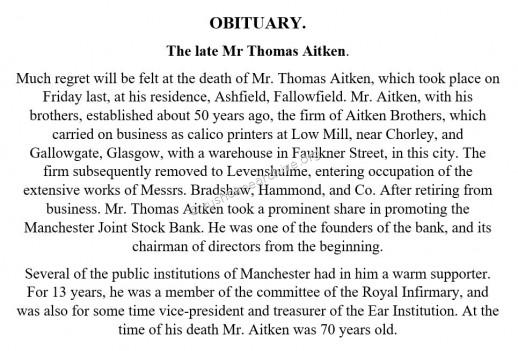
Thomas Aitken bequests to local charitable institutions were mentioned in the local press.
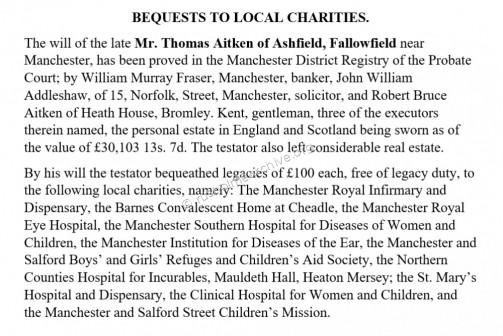
Thomas Aitken had been twice married, his first wife died when she was only 35, but his second wife, Frances Mary, out-lived him until 1911, dying at the age 80. According to probate records she left just over £15,000.00, which today in simple RPI terms would be about £1.25 million. No legacy for charity or any of her three servants in the will, her estate was divided between various members of the family.
After the death of Mrs Aitken, Ashfields was again offered for sale, probably with a view to demolition of the house and the erection of a number of smaller houses. Local residents nearby in the mansions of Oak Drive were apparently concerned at this possible development and led by Sir Edward Donner, (and his benevolence), purchased Ashfield with the grounds and offered it to Manchester City Council for 50% of the price that he paid.
It was reported in the Manchester Courier on the 5th Dec. 1912 that the City Council had agreed;
"The proposal to purchase 10.5 acres of land as an extension of Platt Fields Park at the low average price of £750 an acre met with general favour, and was agreed to almost unanimously. The scheme arose out of an, offer made by Sir Edward Donner, to sell to the Corporation for £2,000 the estate of Ashfield, 3.5 acres in extent, with the house, for which he had paid £4,000. It was realised that the utility of the estate would be greatly increased by the acquisition of seven acres of land which links it up with Platt Fields, and an offer was obtained which brought the price of the whole 10.5 acres up to £9,000. A few citizens living in the neighbourhood agreed to pay £1,000 of this, leaving the net sale price at £8,000."
The City Council duly purchased Ashfield and demolished the house in 1913, adding the site to Platt Fields Park. I know from a report in the Manchester Guardian that the eventual site added to the Park consisted of two plots and the Guardian report is as follows;
“Ashfields was the property of Sir Edward Donner, and the land belonged to Mr Smith-Carington of Grangethorpe House. Ashfield House and grounds were freehold and covered an area of three and a half acres. The plot of land measures seven acres, and is separated from the park by a simple fence. There are 360 fine trees on the land, and the rurality of the scene is enhanced by the presence of a rookery.”
The stone pillars with the name of Ashfield still survive facing towards Wilmslow Road.
If you would like to see another photo of Ashfields follow the link below and remember to use your back button to return to rusholmearchive.org
Tram to Piccadilly.
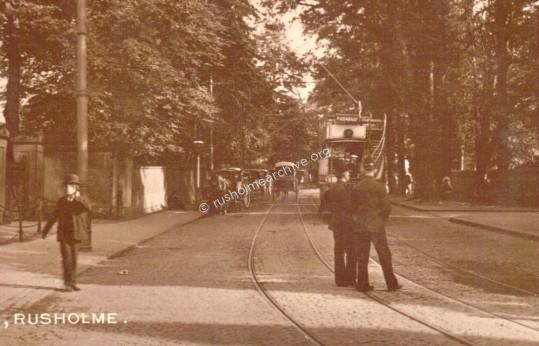
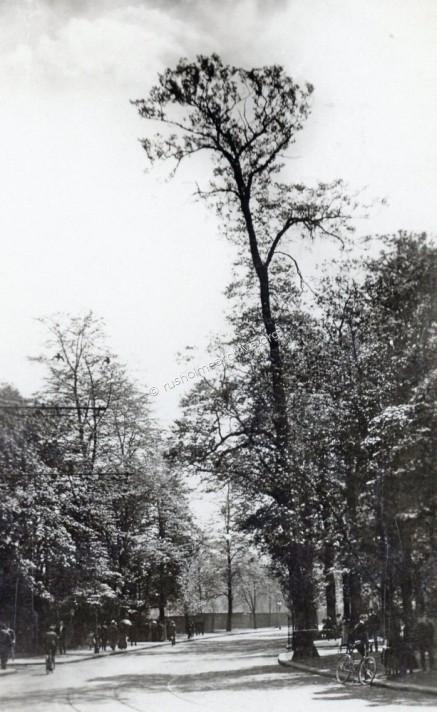
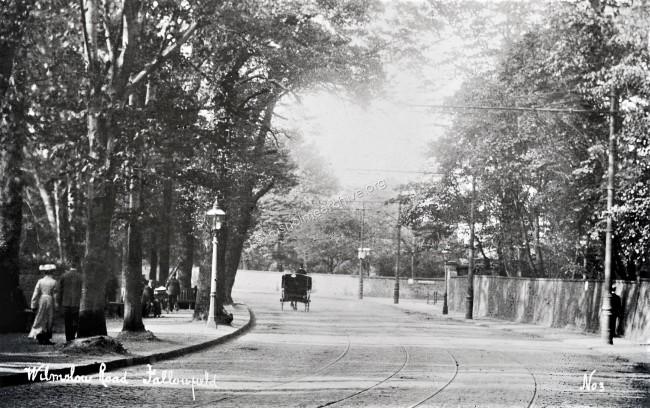
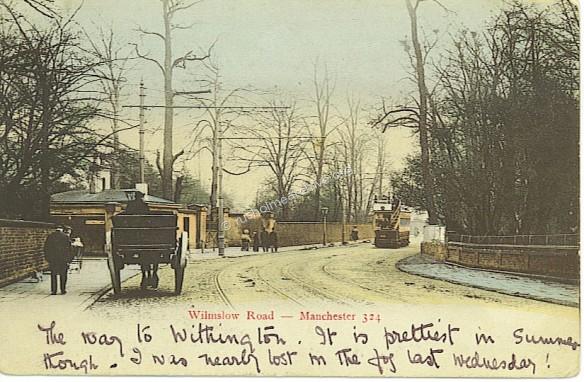
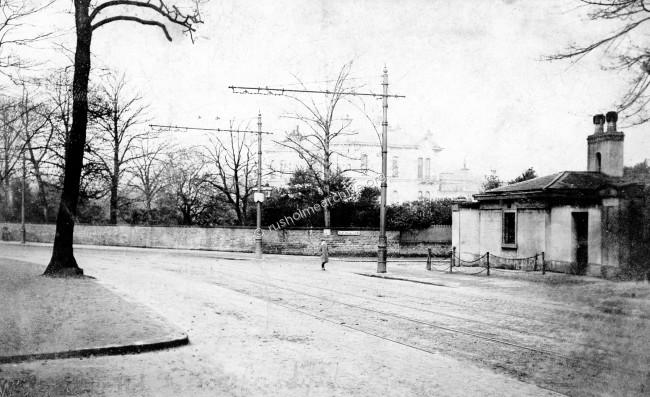
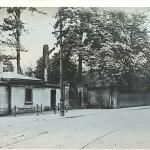
Who can remember how bad the smog could be in Manchester? If you read the message at the bottom of the postcard below it may bring back memories. Beyond the cart on the left of the photograph is the turning left into Old Hall Lane. Also in front of the cart you make out a small building which can be see in the photograph beneath the 'Fog' postcard. Looking south this view shows the entrance into Old Hall Lane and the original entrance lodge of 'The Oaks'. This property was demolished probably after the university acquired 'The Oaks' and built the Worthington hall of residence.
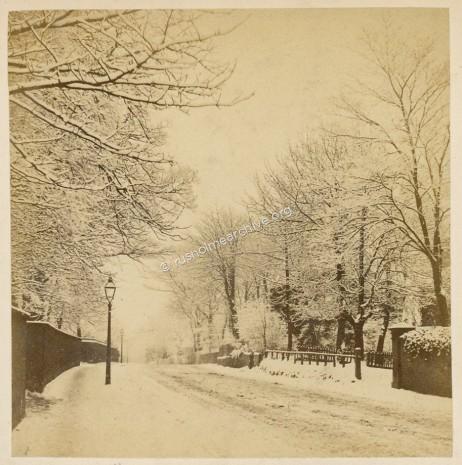
The photograph below was taken by Helmut Petschler probably in the late 1860's.
Petschler was a German immigrant who settled in Fallowfield, dying in 1870. His output of topographical photographs was enormous, many being used for stereoscopic slides. I am sure this photograph, taken on a snowy day is of Fallowfield Brow, some 30-40 years prior to the Brow being widened to take trams.
In the Royal Photographic Society Journal,15th August 1865 I found the following entry;
The Manchester Photographic Society exhibit a large collection of capital pictures, Mr. Petschler’s snow-scenes are very good;
Remember! Wherever you see a 'Gallery' of smaller pictures as below then click on the picture and it will expand.
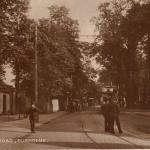
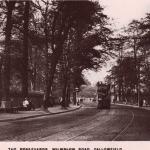
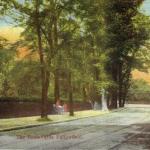
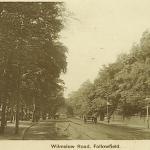
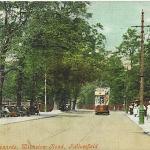
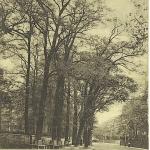
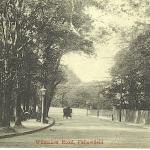
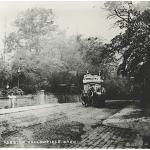
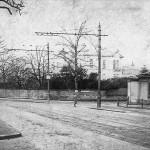
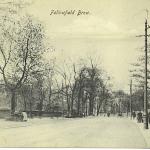
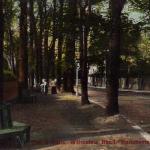
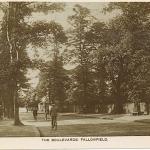
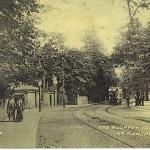
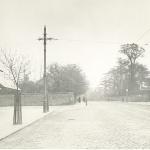
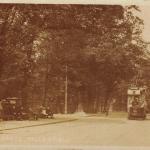
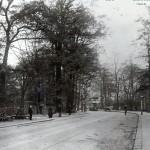
Photo below, looking south to Brow, Brighton Lodge on the left.
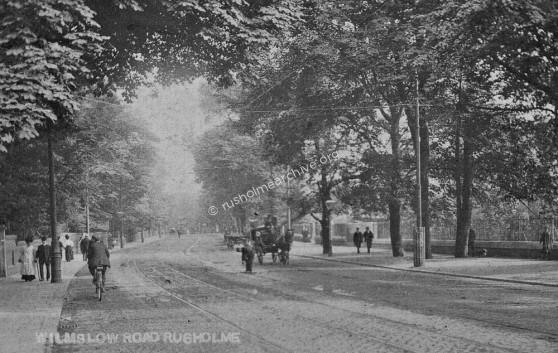
Undated postcard view below, soldier on horseback is riding in a northerly direction.
'The Oaks' and Oak Drive
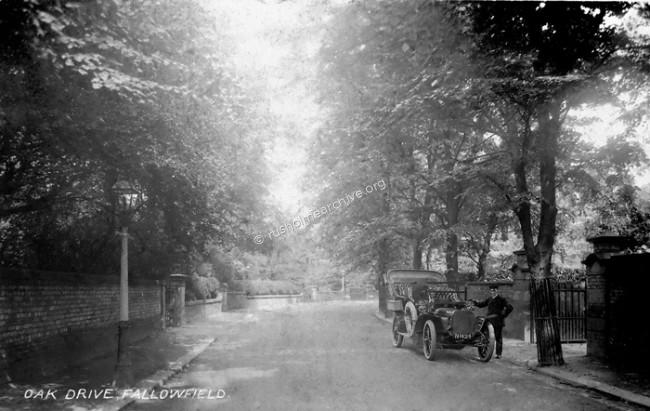
The chauffeur outside of 'Wilfred Nook', north side of Oak Drive 1910
On a previous page I wrote briefly about about the Brighton Grove & Victoria Park Estate. Two attempts appear to have been made to develop a third estate, 'The Oaks'. The land in question was owned by Alexander Bower, a drysalter according to Piggots Directory. It stretched between Old Hall Lane in a southerly direction to Mosely Rd and then in a easterly direction for several hundred yards. The original plan identified some 19 plots over 102,104 sq.yards, called 'The Oaks' in the Township of Rusholme.
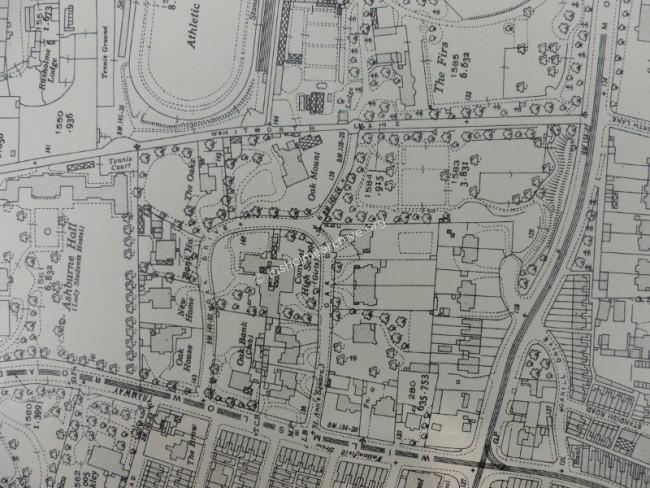
The map of Oak Drive above is circa 1930. It clearly shows the 'horse-shoe shape of the drive and the various buildings around the perimeter, the top right is The Firs, the mansion built by Sir Joseph Whitworth and subsequently the home of C P Scott, Editor of the Manchester Guardian
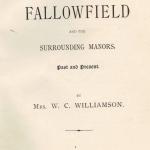
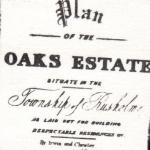
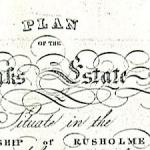
In the book (above) written by Mrs Williamson, 'Sketches of Fallowfield' she states in her preface that, 'I have written nothing that has not been previously published'
She continues 'I have just dipped into this store of interest and given out scraps, but I hope the scraps may prove dainty'
Well some of those scraps are useful. She writes in 1888 about the new buildings that are taking place in Fallowfield and refers particularly to the early days of Oak Drive.
'Sketches of Fallowfield' by Mrs Williamson is now available in a print-to-order edition, having been digitally copied. Try AbeBooks search engine if you are looking for a copy!
On the next page of the website you can download a PDV scan of the book and read at your leisure!
Robert Ogden was a wealthy cotton spinner and he bought a fairly substantial plot of land from the first 'Oaks Estate' prospectus. However it seemed that only this one plot of land was taken up initially. The house he built was called 'The Oaks' and was a neo-classical design by Richard Tattersall circa 1830(?)
Edward Behrens and his family bought the house in the late 1860s and in 1908 the family gave it to the University.
In 1845 the rest of the land was offered in plots for 'Respectable Residences'. Over the next 10 -15 years or so several notable families moved into what became known as Oak Drive.
Alfred Waterhouse, the famous architect of Manchester Town Hall built his own home here in 1861. Barcombe Cottage was built to resemble a Swiss chalet; Mrs Williamson described the house as, 'Displaying the taste of the designer, both internally and externally - the exquisitely stained windows show him also to have been artistic.'
Bank Field was built for a Mr Frank Gill in 1850 and it was said that from one upper window you had a clear view across the country side as far as Alderley Edge.
Sir Edward Donner moved from Victoria Park in 1888 to Oak Mount in Oak Drive and lived there until he died in 1934.
The Firs was the large home built for Sir Joseph Whitworth. It was set in 52 acres of grounds and on part of this estate Sir Joseph had a shooting gallery built to experiment with his armaments business; it was said to be nearly half a mile long and adjacent to what is now called Whitworth Lane.
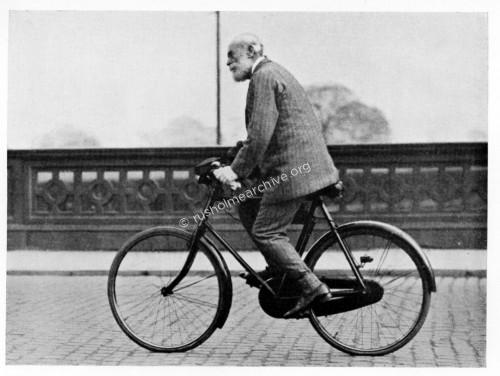
C.P. Scott was the Editor of the Manchester Guardian and lived at The Firs from 1881 until his death in 1932. He was apparently regularly to be seen cycling every day to his office in Cross Street regardless of the weather.
C P Scott on his daily cycle ride to work.
Rachel Ryan neé Montague (1901-78) was brought up in Oak Drive, and went to Somerville College, Oxford to read PPE in 1920.
Her father was Charles Montague, a leader-writer on the Guardian who married CP Scott’s only daughter Madeline. They lived in ‘Oak Field’ a house in Oak Drive, near to the Firs where her grandfather, C P Scott had lived since 1882.
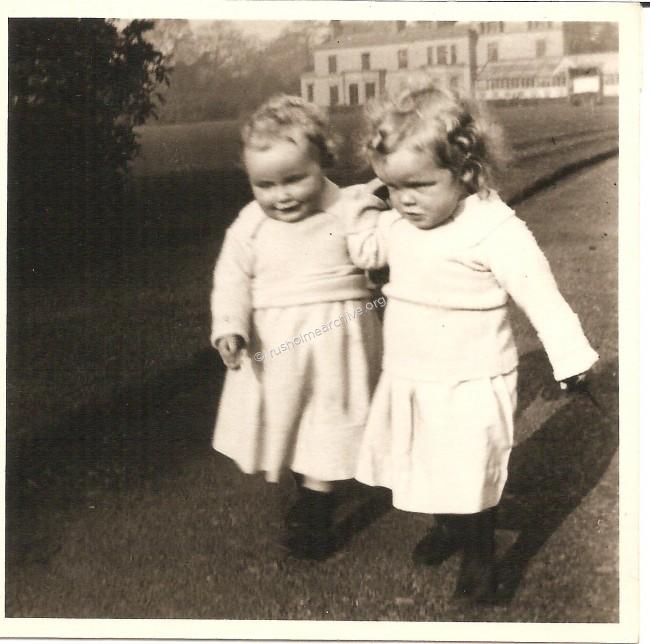
Rachel Ryan recalled in her book,(referred to below) about playing in the garden of the Firs with her brothers & sisters.
The marvellous photograph below is of her sister Rose and brother Aubrey romping in the garden of the Firs which can be seen in the background.
Oak Field can be seen on the left through the trees in the photograph below.
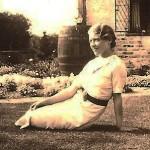 In 1937 Rachel Ryan wrote, ‘A Biography of Manchester’; a photograph of Rachel is on the right, click to enlarge.
Chapter 3 is a ‘Leafy Suburb’ and in this chapter Rachel recalls her early childhood in Fallowfield. .
The following four paragraphs give a clear and valuable contemporary view of Fallowfield when it was still considered a village.
1] "We Montague children were fortunate. The small world of our experience contained almost the only thing in Manchester that was not ugly—a leafy suburb, never very fashionable and now quite out of fashion, but quiet and spacious".
She continued,
2] "By the time my grandfather settled down at ‘The Firs’, Fallowfield had lost most of its isolation. Trains and horse-buses connected it with the city. Substantial middle-class houses, _each with its garden, its coach-house & stables, had been built on the slopes of the low hill which dominated the village on the north".
She referred to their neighbours,
3] "The Grahams, like Grandfather, were well-known Fallowfield figures. Sir Charles was a rich merchant, generous in his gifts to local institutions. Every day he went in to his office by tram, always very neatly and quietly dressed in a black overcoat with a velvet collar, wearing his bowler hat and carrying his umbrella. One day I sat beside him in the tram; he paid for my fare and gave me a penny. The Grahams lived in a very big house in the same quiet semi-circular road as us, and their garden was divided from 'The Firs' by a country lane, unpaved and unlighted. Nearly every day Lady Graham drove out in her carriage behind a coachman and groom. The two gleaming dun horses had their necks arched high by the bearing-rein, a most shocking sight for readers of Black Beauty to see; foam flew from their mouths and spotted them with white. There was something awe-inspiring in the rigidity of the menservants' backs, the silent rolling of the carriage wheels. Very occasionally, Lady Graham took us into the stables with her to feed the horses on apples and sugar, and once she gave me a black rabbit which had been caught in the garden".
4] "But Fallowfield was a very different affair, for it still kept something of a country air, in spite of the ugly new building. A few farms remained among the houses, and their milk floats delivered milk and eggs and cream to Fallowfield households. Each float had a perilous backward slope to its floor, and the gay jingle and rattle from the harness and bouncing milk-cans made pleasant music along the Fallowfield roads. On hot days in summer each pony wore a straw hat, and on May Day his mane and tail would be plaited up with ribbons and a cockade fixed in his cheek-strap".
I would like to express my thanks to the daughter of Rachel Ryan, Susan Adams, who has very kindly allowed me to quote the above extracts from her late mothers book. Susan Adams has also very kindly loaned photographs of her mother, grandparents and brothers & sisters which are shown on this page.
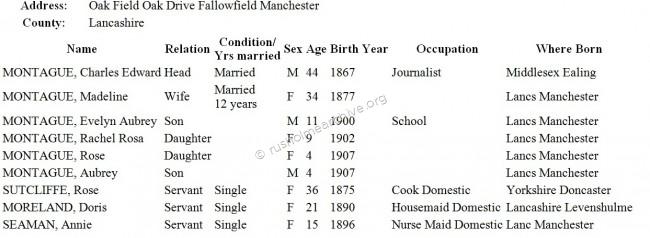
As Rachel Ryan acknowledged in the first quotation above they were fortunate children. Below is the extract of the Montague household from the 1911 Census return, there were three staff to look after the family. The nursemaid had to look after a further three children as there was eventually seven children.
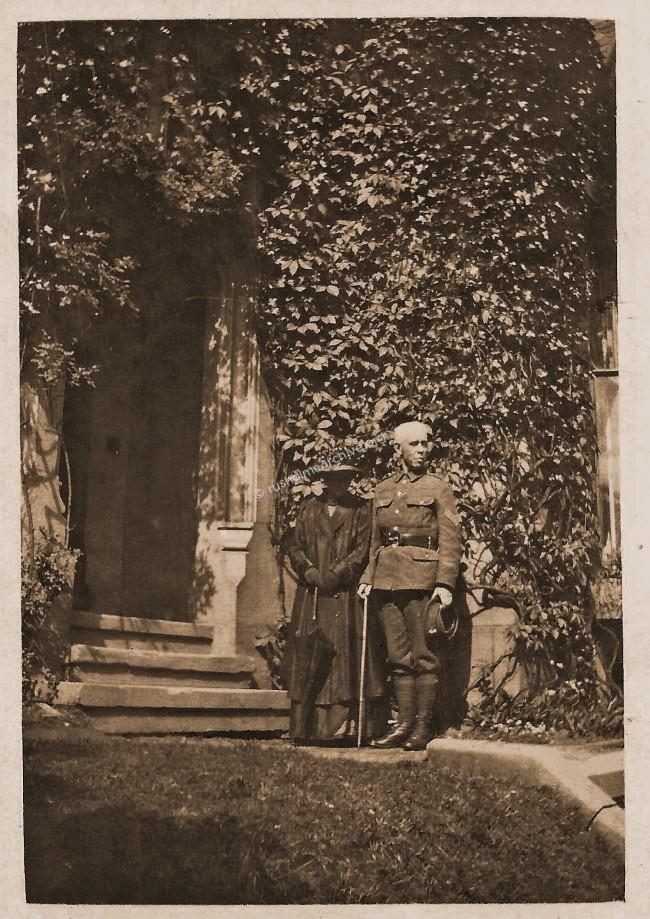
Photograph below is of Charles and Madeline Montague standing on the steps of Oak Field. Charles Montague is in his military uniform so the photograph was taken during WW1.
Oak Field House, Oak Drive.
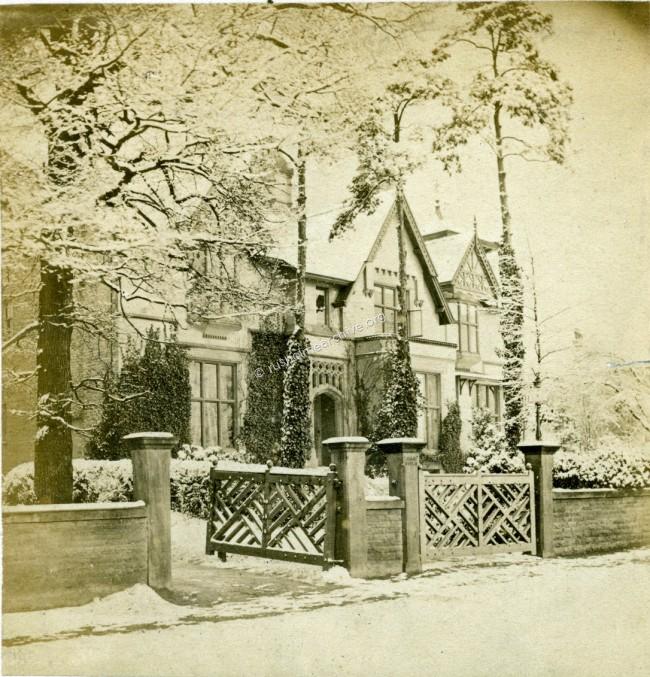
The photograph below was taken some in the mid 1860’s by Helmut Petschler a German born photographer who lived nearby in Edgerton Road, Fallowfield. He travelled extensively throughout the north of England and many of his photographs can still be found. There are a number of followers of Helmut Petschler’s work and I have been very fortunate in locating this photograph from Robert Haley in Lytham St Anne’s who has kindly loaned me this image. He has an interesting collection of Petschler photographs some of which can be seen at the following link: http://www.amounderness.co.uk/blackpool_photos_c1868.html
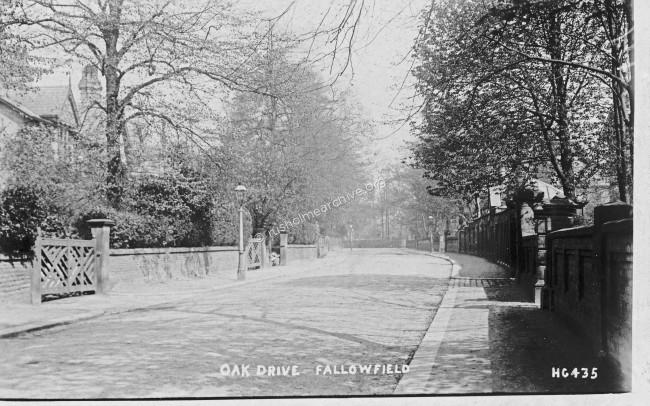
I am quite confident that the photograph below is of the house in Oak Drive that the Montague family lived in – the wooden gates are the same as the later postcard view above, a magnified image clearly shows the name Oak Field marked on the stone entrance pillars, examining in detail the aerial image below of Oak Drive does show the detail of the roof and gables etc; for me it is an exciting find!
Charles Montague was a successful journalist & author and below are biographical notes extracted primarily from Wikipeadia:
Charles Edward Montague, (1 January 1867 – 28 May 1928), was an English journalist, known also as a writer of novels and essays.
He was born and brought up in London, the son of an Irish Roman Catholic priest who had left the church to marry. He was educated at the City of London School and Balliol College, Oxford. In 1890 he was recruited by C. P. Scott to the Manchester Guardian, where he became a noted leader writer and critic; while Scott was an M.P. between 1895-1906 he was de facto editor of the paper. He married Scott's daughter Madeline in 1898.
Montague was against the First World War prior to its commencement, but once it started he believed that it was right to support it in the hope of a swift resolution. In 1914, Montague was 47, which was well over the age for enlistment. But in order to enlist, he dyed his white hair black to enable him to fool the Army into accepting him. H. W. Nevinson would later write that "Montague is the only man I know whose white hair in a single night turned dark through courage." He began as a grenadier-sergeant, and rose to lieutenant and then captain of intelligence in 1915. Later in the war, he became an armed escort for VIPs visiting the battlefield. He escorted such personalities as H.G. Wells and Bernard Shaw. After the end of World War I he wrote in a strong anti-war vein. He wrote that "War hath no fury like a non-combatant." Disenchantment (1922) was one of the first prose works to strongly criticise the way the war was fought, and is a pivotal text in the development of literature about the First World War.
He returned to the Guardian, but felt that his role was diminishing as the years passed. He finally retired in 1925, and settled down to become a full-time writer in the last years of his life. He died in 1928 at the age of 61.
Evelyn Aubrey Montague, the Olympic athlete and journalist depicted in the 1981 film Chariots of Fire was the son of Charles Montague.
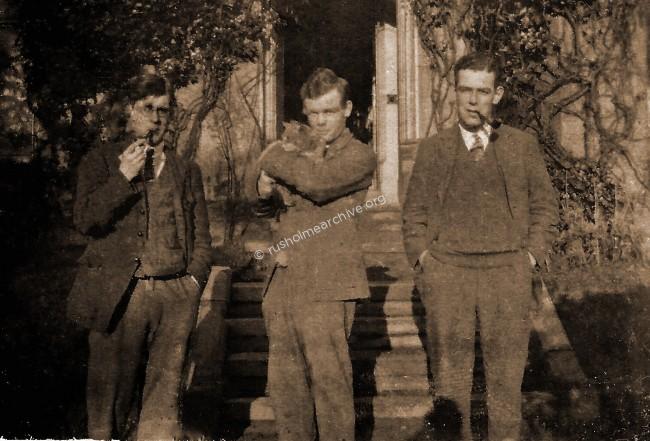
The photograph below is of the three eldest sons of Charles Montague, left to right, Bill, Aubrey and Evelyn, the Olympian athlete.
'The Acorns'
When the Behrens family disposed of The Oaks to the University in 1908, Walter L. Behrens, the eldest son of Edward Behrens moved in 1909 to a house nearby in Oak Drive called The Acorns.
It was a substantial property having some 17 rooms and here Walter lived alone, (he was unmarried), but according to the 1911 Census he had four staff;
William Gibbs, a 59 year old butler, Catherine Rolson, a 40 year cook and two housemaids, Margaret Spalding, (36) and Elizabeth Buckley(34).
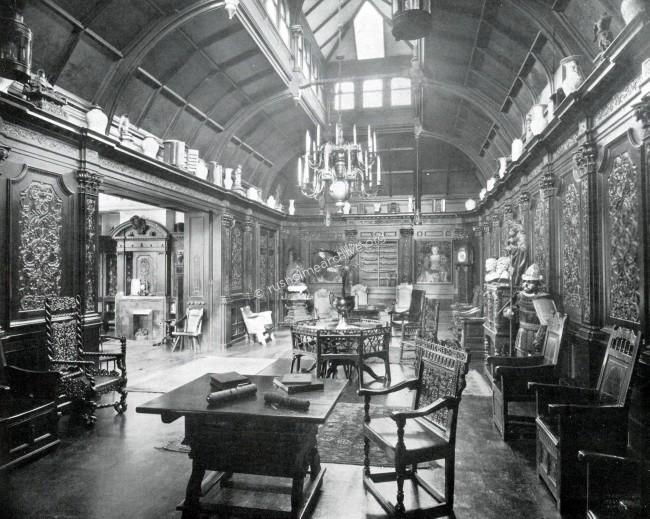
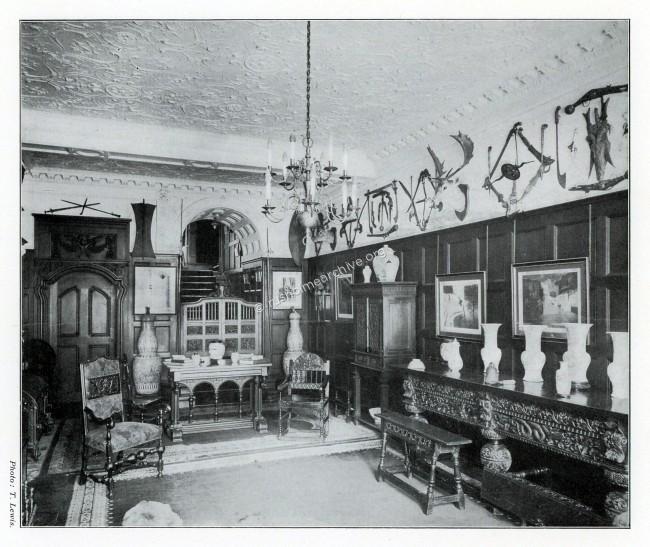
Walter Behrens was a collector of Japanese object d’art and Jacobean furniture, to accommodate the collection he had the interior of The Acorns re-modelled by Percy S Worthington, a noted Manchester architect.
Below are four illustrations from the Architectural Review together with notes about the work that was undertaken.
‘The long gallery, the main feature of the interior, was designed to receive a valuable collection of Japanese curios and works of art, the museum beyond being for the same purpose. It is mainly lit by top-light. This long gallery is lined with fine old oak panelling, richly carved, behind which air-tight bronze cases are arranged for the display of curios. This panelling had to be considerably extended to fill the room, and niches were designed for the angles.
The hall has been considerably enlarged by the taking down of various internal walls. The stairs to the landing, the top-lighted ante-room, and the hall are panelled in oak throughout. The staircase was entirely rebuilt, the main feature being a broad arch with modelled plaster-work leading from the hall, and ‘dog gates’ with figures of ‘Night’ and ‘Morning’.
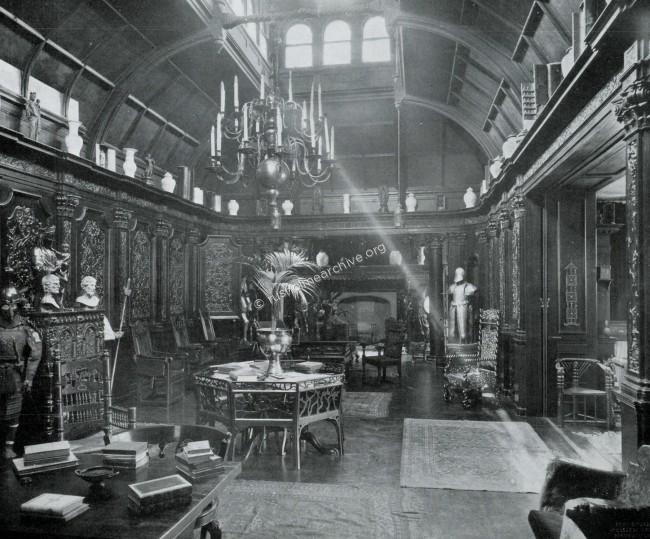
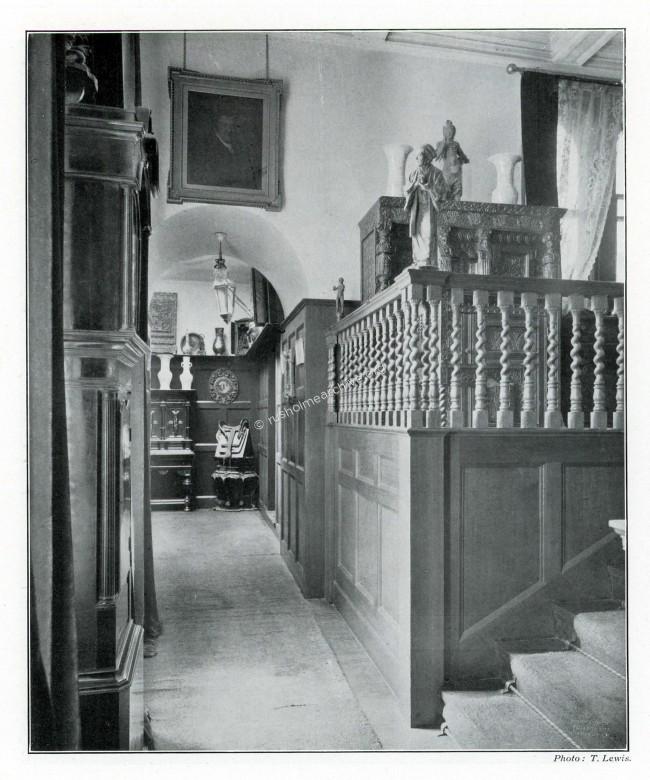
Walter Behrens died in February 1913 and the following notice was published in the Manchester Guardian, 17th Feb. 1913:
We regret to announce the death, in his fifty- second year, of Mr. Walter Lionel Behrens, of the firm of Messrs. S. L. Behrens and Co., of Manchester.
Mr. Behrens, who was the eldest son of the late Mr. Edward Behrens, was one of the foremost merchants of the city, but he took little part in its public life. He was a Conservative, and gave assistance to successive Conservative candidates for South Manchester, the division in which he lived; for when, on the death of Mr. Edward Behrens, his house at Fallowfield became the home of the hall of residence for women students at the Manchester University, formerly housed at Ashburne Hall, in Victoria Park, Mr. Walter Behrens removed to a neighbouring house, where he established the collection of Japanese objects which was perhaps his chief interest apart from business. He collected with gusto and knowledge, and his cases were especially rich in metal work, in carving, and in lacquer. His set of metal sword-guard illustrates the history of the growth of Japanese decorative art as applied to metal, ranging from early specimens m iron, pierced in simple patterns, to advanced workmanship in silver and coloured bronzes, delicately inlaid and chased.
In the collection there are also a splendid series of lacquer medicine or perfume boxes, and the carvings in wood and ivory are also very fine. In the summer of 1908 Mr. Behrens lent a portion of his Japanese collection to the Corporation for exhibition, in the City Art Gallery, and for this show he wrote an illustrative handbook, which was an excellent piece of work, giving clear accounts of the processes of manufacture and decoration exemplified in the exhibits, and assisting the Western spectator of Japanese art to place himself at the right point of view for understanding and enjoying it.
BEHRENS, Walter Lionel of 16 Oxford-street and The Acorns, Fallowfield, Manchester, died 15 February 1913 at The Acorns.
Probate, London 1 July to Oliver Philip Behrens merchant.
Effects: £121,622 10s. 6d.
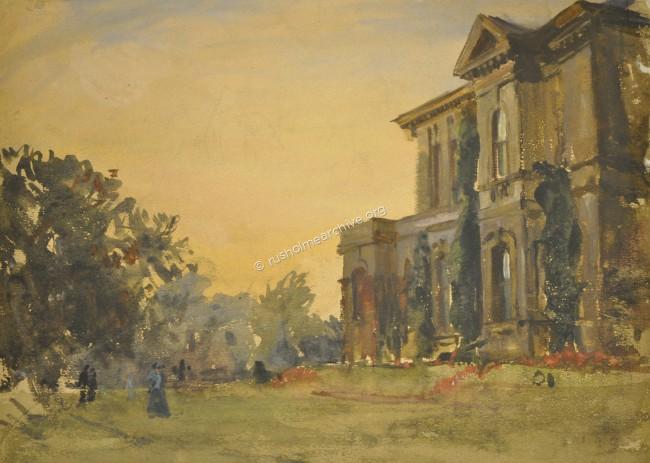
Other than the examples above, finding photographs of individual properties in Oak Drive has been difficult. Perhaps other than family photographs surviving it is likely that in this exclusive area commercial photographers would not have been welcome. Below is a water-colour painted in 1903 by Francis Dodd RA, titled 'Evening View of a Villa in Oak Drive, Fallowfield, Manchester'. It is part of the Manchester City Art Gallery collection and I appreciate permission being given to display this picture. It does seem to evoke an atmosphere of a rather grand villa set in a generous and wooded landscape. Francis Dodd lived nearby and worked in Manchester between 1895 and 1905 before moving to London. In 1916 he painted a portrait of C P Scott, also in the Manchester City Art Gallery collection.
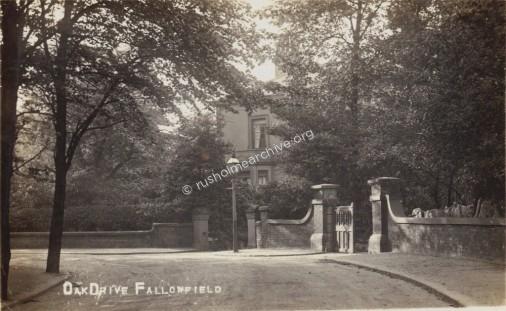
Postcard Views around Oak Drive
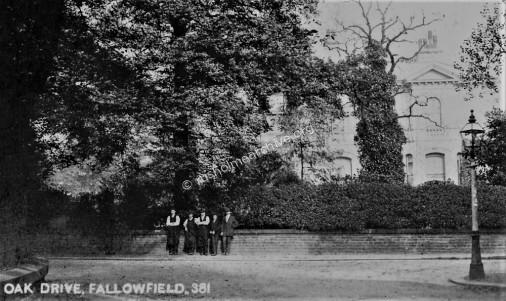
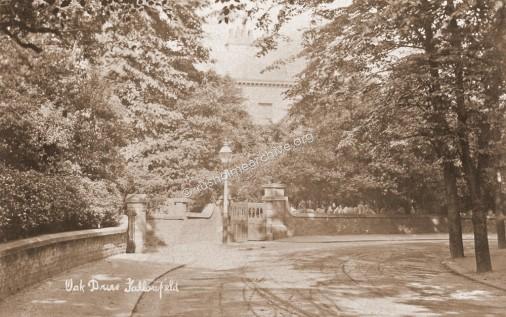
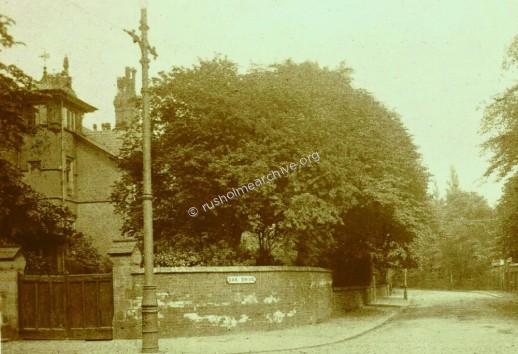
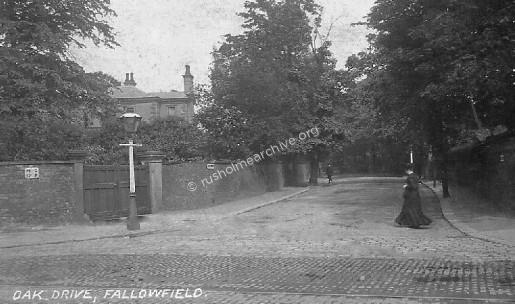
In 1900 a Roman Catholic order of nuns, the Faithful Companions of Jesus acquired the Hollies in Oak Drive to use as a convent & school for girls.
They acquired three more of the Oak Drive properties as follows; 1920 “The Acorns”, 1938 “Oak Bank” and finally in 1952 “Staneswood”.
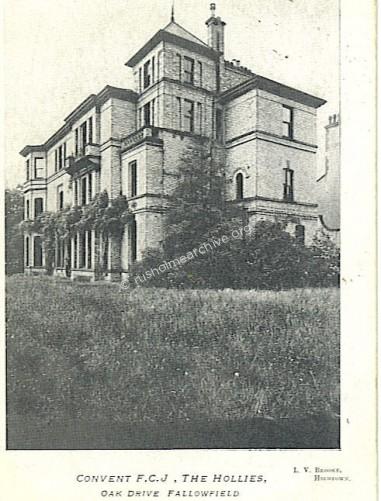
The school re-located to new premises in Didsbury in 1961 and in subsequent years the entire site of Oak Drive and the adjoining grounds of “The Firs” have now become the Owens Park Manchester University campus.
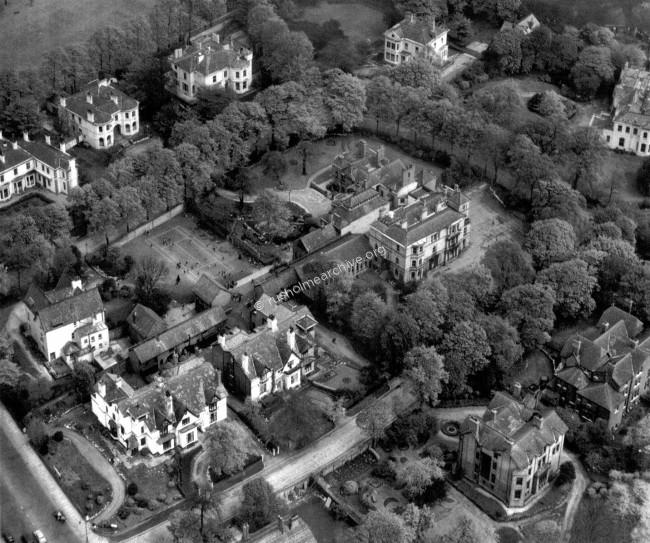
In the aerial photograph below (very kindly loaned to rusholmearchive.org by Mr Thurston Heaton) the Hollies Convent and School can be very clearly seen in the centre. The distinctive shape of the horse-shoe shaped Oak Drive is very clear. All of the buildings in the photograph have now been demolished.
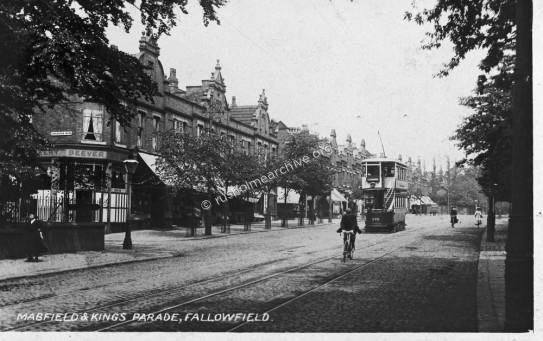
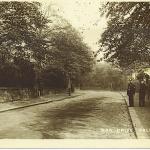
Views below are of the row of shops, Kings Parade, on Wilmslow Road, (opposite the entrance to the Oaks and looking north to Fallowfield Brow
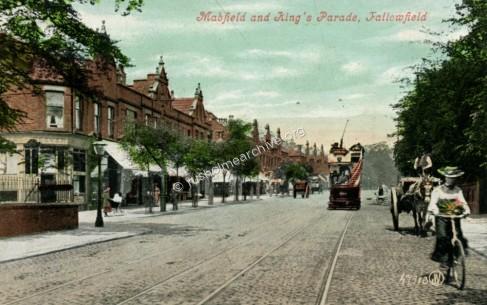
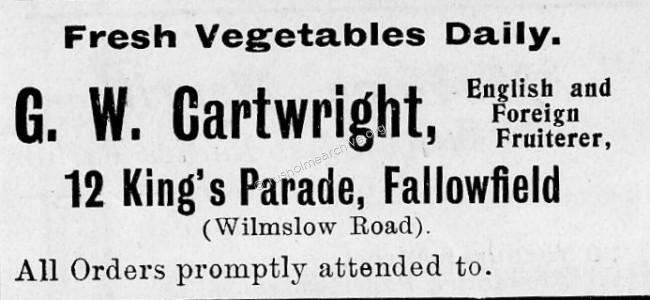
Remember! Wherever you see a 'Gallery' of smaller pictures as below then click on the picture and it will expand!
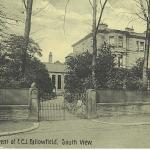
Brynderw, Oak Drive; Home of Dr Abraham Emrys-Jones MD.
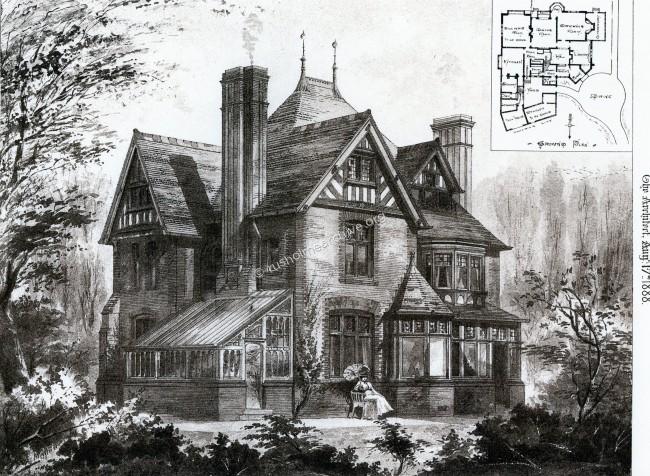
The illustration above is of a house on Oak Drive that was built in 1888 for Dr A Emrys-Jones.
The name of the house, 'Brynderw' is I believe, when translated from the Welsh, 'Oak Hill'. As this house was built on the Oaks estate it is an appropriate translation.
Although not a 'Cotton Magnate' clearly Dr Emrys-Jones was very successful in his medical career.
The text immediately below is from the 'Architect Magazine' August 17th 1888 and I have reproduced the description of the property from the magazine.
This house has just been completed for Dr D. EMRYS JONES, and is situated in a finely-wooded position which adds considerably to the general effect. As will be seen from the plan all the entertaining rooms face south and west. It is from this aspect the drawing is taken. The external brickwork is built of picked white headers relieved with red Ruabon quoins—arches, strings, chimneys also being of red Ruabon. The plinth, is formed of deep blue Staffordshire bricks, the roof being covered with EDWARDS'S red tiles, and ornamented with scolloped bands. The general contractors were Messrs. BROWN & SON, of Salford. The whole of the work (including internal fittings and decorations) was carried out under the superintendence of the architects, Messrs. EDWARD & FRANK HEWITT, of 9 Albert Square. Manchester.
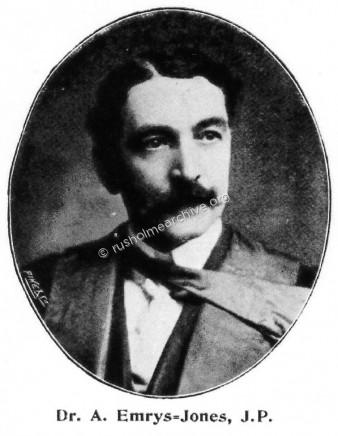
Biographical notes about Dr Abraham Emrys-Jones;
Resident Medical Officer at the Hulme Dispensary: House Surgeon. Assistant Surgeon and Surgeon to the Manchester Royal Eye Hospital : Ophthalmic Surgeon to the Bolton Infirmary: Honorarv Oculist to the Manchester Industrial Schools. Girls' Jubilee Schools, etc.: Referee for Ophthalmic cases to the Manchester County-Court ; author of " Care of the Eyesight." " Disposal of the Dead." " Diseases produced by Drink '' and many papers on ophthalmic subjects :
Justice of the Peace for the City of Manchester: President of the Manchester Edinburgh University Club: Vice-President of the Manchester and Salford Sanitary Association, of which society he was for ten years Hon. Secretary; President of the Manchester Welsh National Society, and takes an active interest in Welsh educational matters: Member of the Court of Governors, University College, Aberystwith. Clubs: Reform and Brasenose, Manchester; Author's. London.
Cotton Magnates!
A friend of mine told that as a small boy he was taken on a walk around Oak Drive. In an almost hushed and reverential tone he was told that this is where the cotton magnates live.
'I did not understand this ' he told me, 'I knew what magnets were and I knew what cotton was but I could not understand 'cotton magnets!'
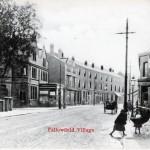
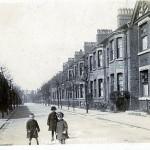
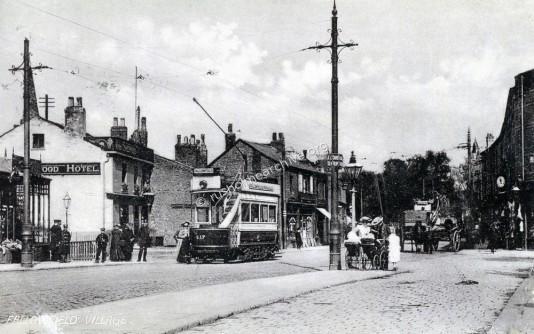
Fallowfield Village, straying over the border to look at several views of Fallowfield.
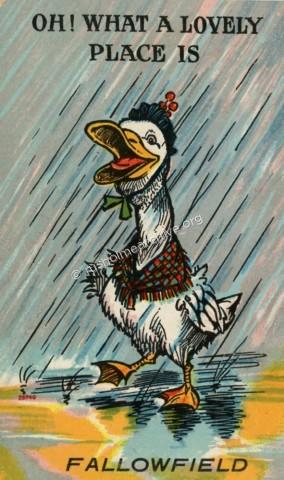
The postcard above is from Lilly to Flo, it is in 1912 and Lilly is telling Flo that is rainng very hard - an apt choice of card!
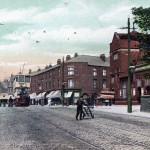
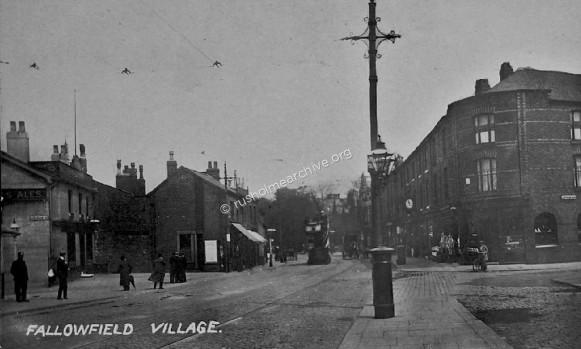
The photograph below dated 1904 looking south towards Fallowfield station gives a classic and very animated view of the time. On the one hand an open coach being driven sedately, (?) down the centre of the road with groom holding the whip, whilst parked by the kerbside is a fairly new registered car. Certainly discernible on the original postcard, the car has a registration of N79. From 1903 cars had to be registered with the local authority, Manchester was allocated the number N and it was in use from 1904 until 1913.
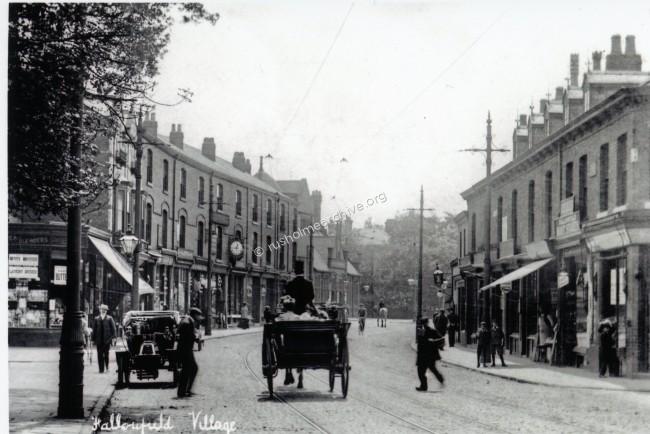
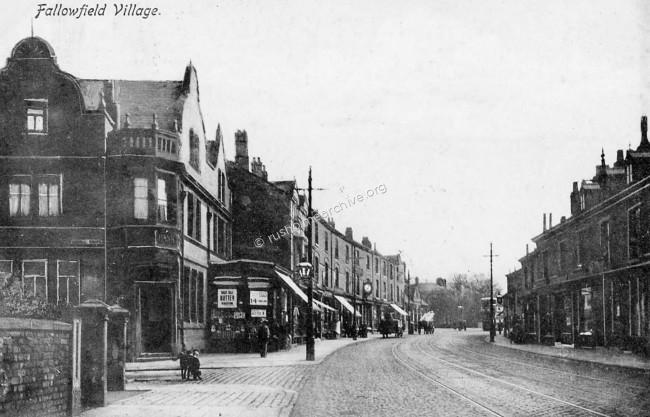
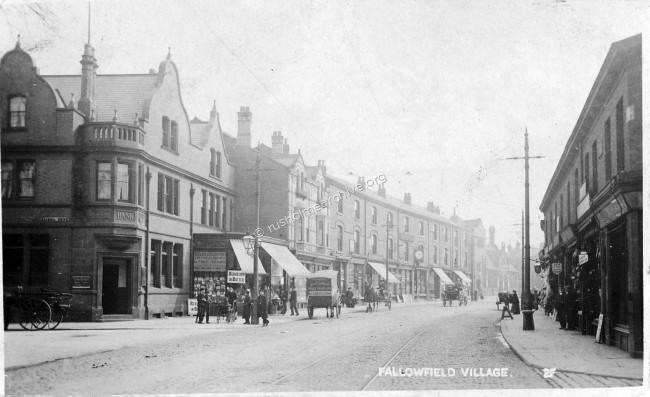
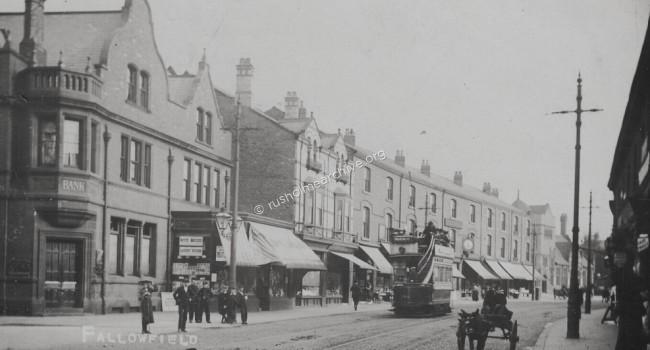
The four photographs below are also looking in a southerly direction; the first one below is undated - clearly visible on the right near the lamp-post is the turning into Portland Grove, the street was demolished as part of slum clearance in the early 1970's. The second image is dated 1909, the third is dated 1906. In this photograph there is a 'Tram boy' leaning against the lamp-post on the left of frame, just beyond him after the first cart you can just see a groom attending to the horses, wearing white,(?) leggings and polished boots, finally number 4 there are more people looking at the camera including the tram boy, similar date to the above?
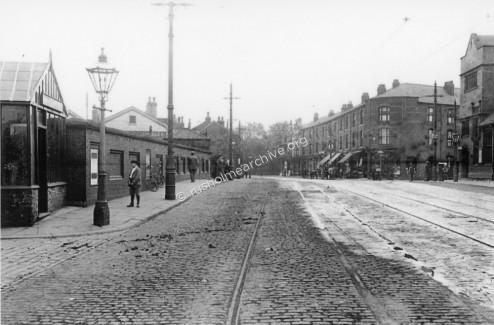
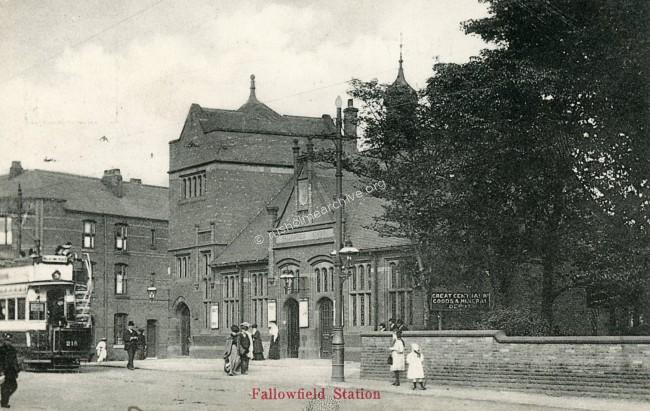
Photograph below is taken from outside of Fallowfield Railway station, (presently the site of Sainburys) and looking north.
Photographs below are from a similar position looking south - and there are no traffic lights!
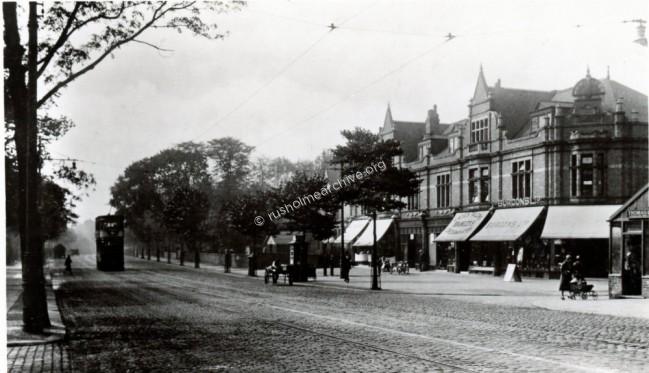
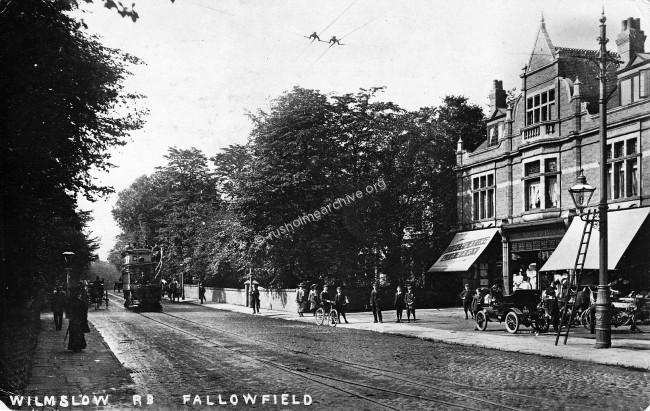
The photographs below are taken from the parade of shops seen in the photo above, looking in a northerly direction, also in the photograph above you can see a shop on the corner called Burgons, (superior shops for the carriage trade?). Below photo you can see Burgons on the left of the frame.
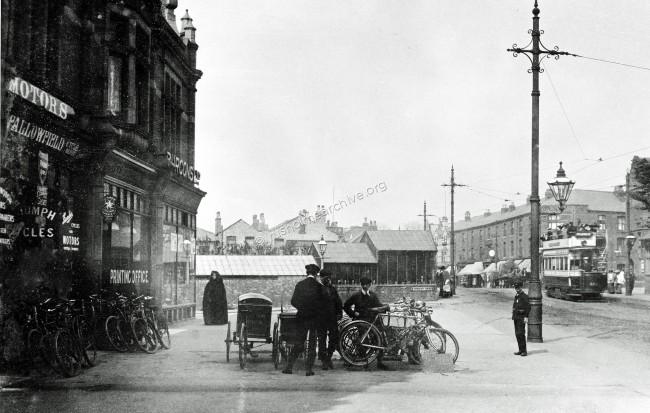
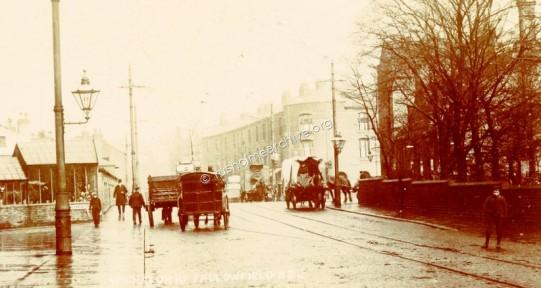
Photographs below are looking north, but taken from a similar position on the western side of the road.
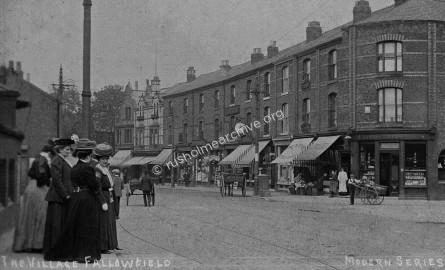
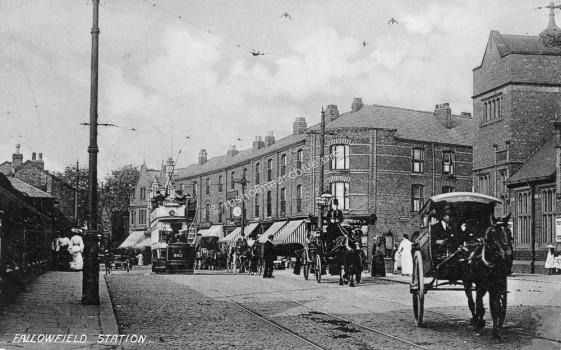
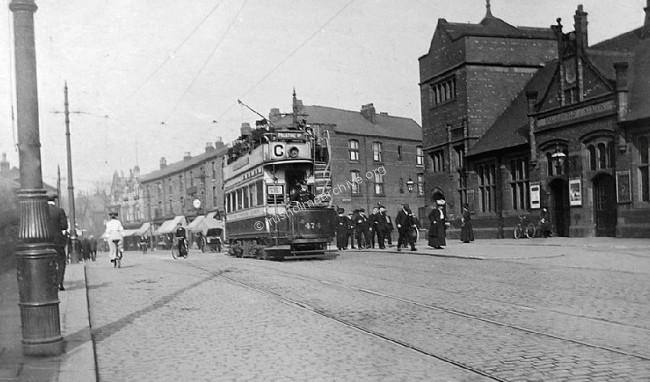
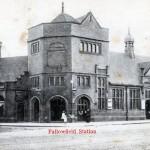
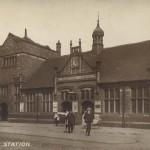
Fallowfield station before 1914
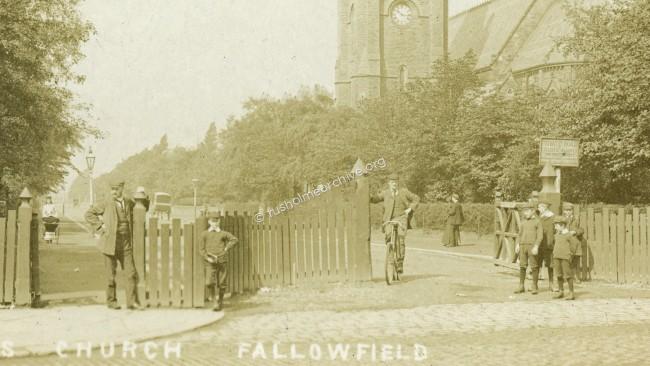
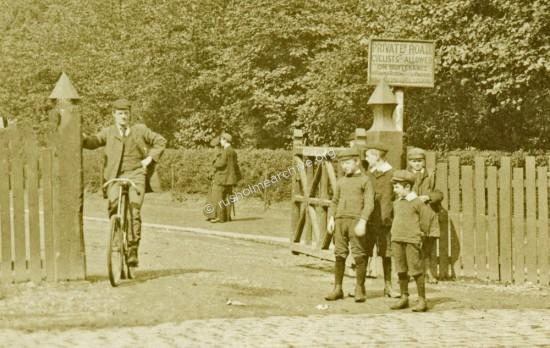
View immediately below looking west along Wilbraham Road, Holy Innocents Church on the right, and below that a close-up of the right hand showing the notice indicating Wilbraham Road was a private and gated road. The words on the notice are as follows;
PRIVATE ROAD.
CYCLISTS ALLOWED ON SUFFERANCE
If found riding on paths they will be prosecuted
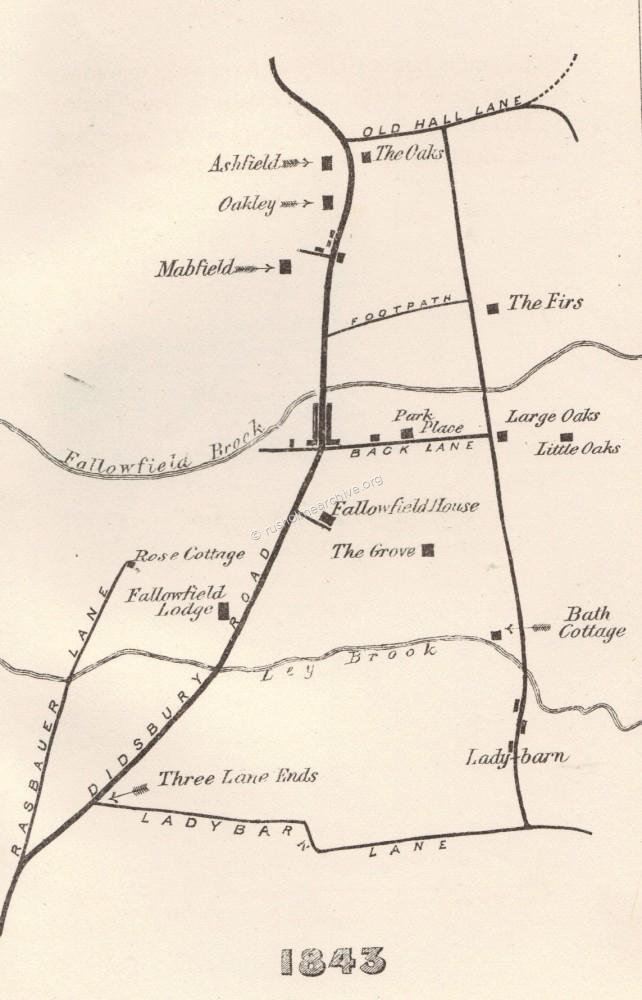
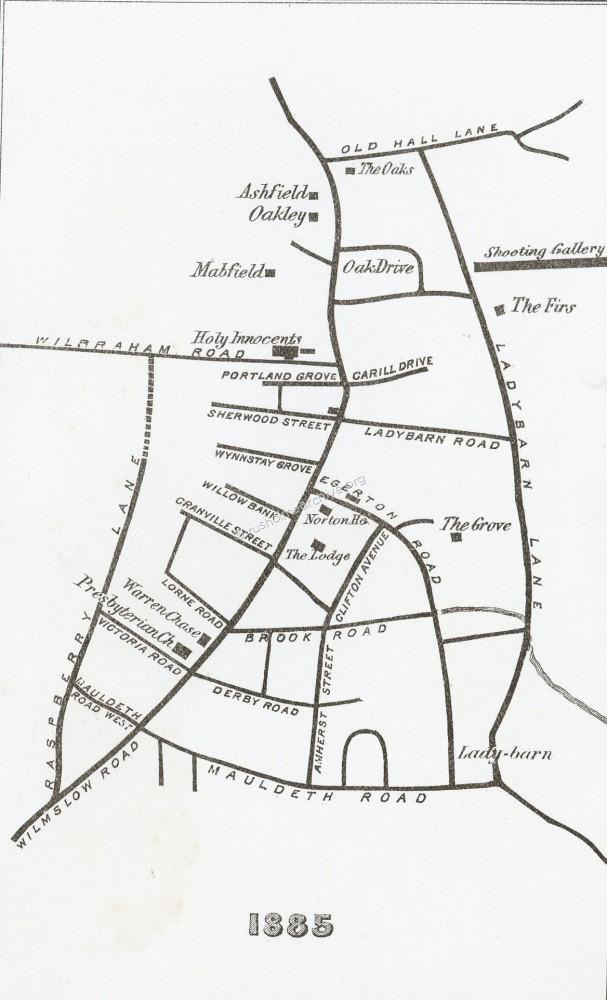
In the book 'Fallowfield' written by Mrs Williamson she clearly identifies the changes that took place over a half century. The two maps below illustrate the extent of the changes.
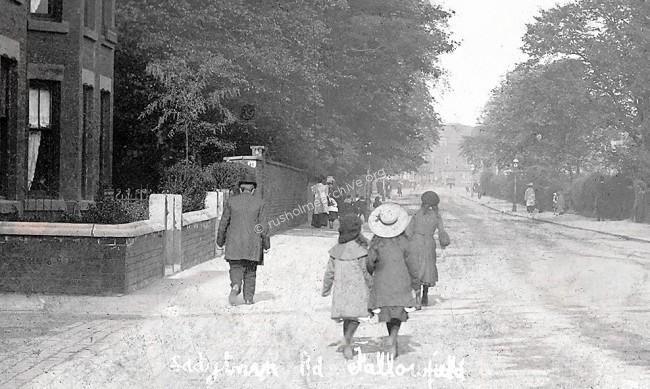
Photograph below, a leafy Ladybarn Rd, the railway station is away to the right.
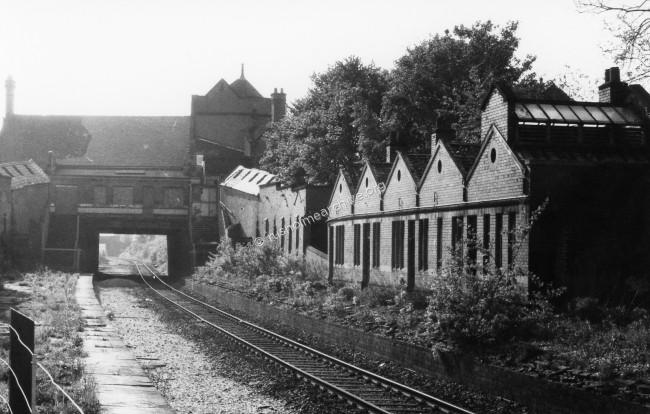
Photograph below of disused Fallowfield Railway station, 1974. Now the buildings on the right and the rail track have been replaced by the Sainsburys car park.
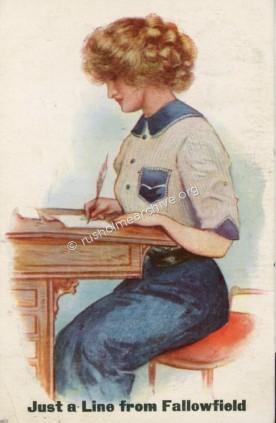
Again this card below is to Flo from her, "Ever loving friend Lilly" and again is dated 1912
Remember! Wherever you see a 'Gallery' of smaller pictures as below then click on the picture and it will expand.